Mr. Green's Efficiency Watch: October 2023

Mr. Green's Efficiency Watch

The quarterly review of energy efficiency standards & regulations

October 2023

Mr. Green says... Let’s talk EV!

Welcome to a special edition of Efficiency Watch, where we focus on the exciting world of electric vehicles. Electrification of transportation is one of the most important components in the global effort to reduce greenhouse gas emissions. We’ve assembled a collection of our most recent blogs about EVs to keep you up to speed with the latest happenings. First, we highlight the major technology trends reshaping the U.S. EV market. Then, we review how government incentives are accelerating the electrification of school buses. We look at two key solutions for reducing wait time for battery charging before examining how cold weather is impacting the adoption of EVs. Finally, we discuss what it takes to get rid of the big, heavy lead-acid battery in a battery electric vehicle.

As always, if you have any questions or comments, or would like me to report on a specific regulation, please feel free to contact me through our web form.

In this special issue:

As EVs continue to gain market share in the automotive industry, technological developments also keep making strides. Battery voltage is now approaching 1,000 V, and automotive architecture is shifting from a 12 V bus system to a 48 V one. We look at the newest power semiconductor technologies being adopted into EVs and highly reliable, highly efficient power conversion solutions that are automotive-qualified and available right now. Read more.

Almost 500,000 school buses serve approximately 25 million students in the U.S., driving around 3.4 billion miles a year. However, only 1% of these school buses are electric, making the yellow buses an obvious target for governments wanting to reduce carbon emissions. It would cost an estimated $150 billion to replace all school buses in the country. Federal, state and city governments are hard at work helping cover the costs. Read more.

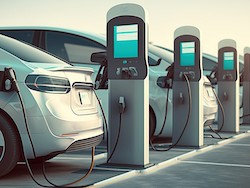
As we enter the second decade of the global electric car movement, battery charging time remains the highest hurdle to clear. Choosing between the two primary solutions, battery swapping and extreme-fast charging (XFC), is not an “either/or” technology decision. It’s a “depending on the use case” economic decision. We break down the advantages and disadvantages of each method and explore the possibility of five-minute EV charging. Read more.

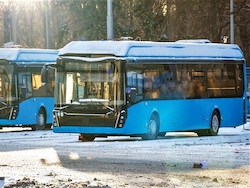
Cold weather reduces the range of EVs by up to 30%! The impact can be greater for electric buses due to the large cabin space that needs to be heated without the presence of an internal combustion engine. As cities around the world transition to electric public transportation, transit agencies in cold places are working deep into their winter nights to mitigate the negative impact of climate on their EV fleets. Many innovative solutions are being developed to extend range. Read more.

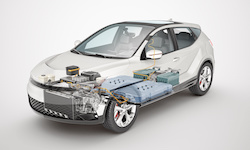
The continuous advancement of lithium-ion battery technology has given electric cars longer driving range, faster acceleration and more horsepower than ever before. Yet, most EVs on the road today still carry around a 12 V lead-acid battery for standby power. But why? We examine a reliable and efficient power supply design that eliminates the 12 V battery completely by safely drawing from the car’s high-voltage battery pack. Read more.


Postagens mais visitadas deste blog

Programação de um CLP: Modos de programação

The Mystery of USB Chargers

STRONG SRT 4622 Satellite TV Receiver Repaired